
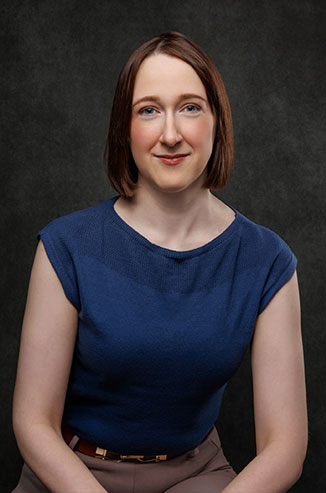
Rianna Ragle, MSW, LISW, CSP
Office Location
2700 Westown Parkway, Suite 425,
West Des Moines, Iowa 50266
Phone:+ (515) 400-0330
Fax:+ (515) 528 -7771
My Approach To Therapy
I believe that major life transitions—a medical diagnosis, the onset of cognitive change, caregiving responsibilities, or the death of someone impactful—deserve serious, sustained attention. Rather than moving toward quick acceptance or closure, I create space for clients to sit with the full complexity of what’s happening: the contradictions, the nonlinearity, the ways loss and change reshape identity differently for each person.
I work from narrative therapy, acceptance and commitment therapy (ACT), and meaning-reconstruction approaches—frameworks that honor both the practical and existential dimensions of these transitions. A diagnosis doesn’t erase who you are; it changes the terrain you navigate. Through this work, we explore the stories you tell about yourself and what becomes possible when we notice stories that don’t quite fit your experience. Together, we clarify what matters most and build a life aligned with your values, even within constraint or loss.
I’m drawn to work with individuals in the early stages of neurodegenerative conditions or chronic medical illness as they navigate the shock and reorientation of diagnosis. I also work with care partners managing role changes, caregiver strain, and the ambiguous loss and anticipatory grief that accompanies caring for someone facing conditions like Parkinson’s disease, Alzheimer’s disease, ALS, frontotemporal dementia, or Lewy body dementia. I see individuals, families, and couples whose relationships are being reshaped by illness or grief.
I also work with adults seeking therapy for personal growth, direction, self‑understanding, or relational support. Many people come to therapy not because of a single defining event, but because they feel stuck, overwhelmed, disconnected, or unsure how to move forward. I help clients make sense of their internal world, strengthen emotional resilience, and cultivate more meaningful relationships with themselves and with others. I enjoy working with couples, whether they are navigating the impact of illness, communication challenges, or broader relationship transitions.
Therapy is about building a life that feels meaningful and aligned with what matters most to you, even as circumstances have changed. When we encounter moments were sitting with this complexity isn’t enough, I draw on tools from acceptance and commitment therapy and dialectical behavioral therapy to enhance distress tolerance, emotional regulation, values clarification, and engagement in mindfulness—to help you move toward the ways that matter most to you.
I value the encounter in the present moment—the specificity of your experience, the particulars of your story, and the strengths that have carried you to this point.
Professional Biography
Rianna Ragle, LISW, CSP, is a Licensed Independent Social Worker and Certified Specialist in Psychometry, specializing in the psychological and relational dimensions of neurodegenerative and chronic medical conditions. She holds a Master’s in Social Work from the University of Iowa, where she completed specialized certifications in Aging and Longevity Studies and End-of-Life Care.
Her clinical expertise is built on over a decade of direct work with older adults and families facing serious illness. She has provided direct care to individuals with dementia, hospice, and severe medical conditions; administered neurocognitive assessments for to aid in diagnosis of neurodegenerative conditions and acquired brain injuries; and delivered therapy services in community mental health settings.
Rianna regularly presents to patients and care partners through the American Parkinson’s Disease Association–Iowa Chapter. She is also passionate about educating therapists and future therapists on neurodegenerative conditions and mental health and has presented on this topic in collaboration with the University of Iowa, School of Social Work.
She understands the specific complexity of navigating neurodegenerative illness—the identity loss, the ambiguous and anticipatory grief, the shifting of roles, the isolation, and the ways everything changes all at once—not from theory alone, but from sustained professional work with the individuals and families facing these challenges. Her clinical work is rooted in the conviction that you are not alone in this experience, and that the complexity of what you’re experiencing is entirely understandable.